
Is Claude Code and the Rise of Agentic Frameworks the New Standard?Architecting for Persistence: The Agent Knowledge LayerEfficiency and Performance in the Agent Era⚡ Quick Bites📊 Comparison: Agent Orchestration Tools📊 Tool | Core Focus | Architectural Shift❓ FAQ: Today's AI News Explained
TLDR: The AI landscape is shifting from simple chat-based completion to complex, persistent agentic workflows. Architectures like the Agent Knowledge Layer (AKL) and protocols like MCP are transforming how agents interact with filesystems and external tools.
Developers are witnessing a rapid evolution in how autonomous coding agents are built and deployed. The convergence of persistent memory, code-native tool orchestration, and standardized protocols is moving the industry away from experimental CLI scripts toward robust, scalable agent platforms. This week's news underscores a pivot toward performance, stability, and the formalization of the agent-environment interface.
Is Claude Code and the Rise of Agentic Frameworks the New Standard?
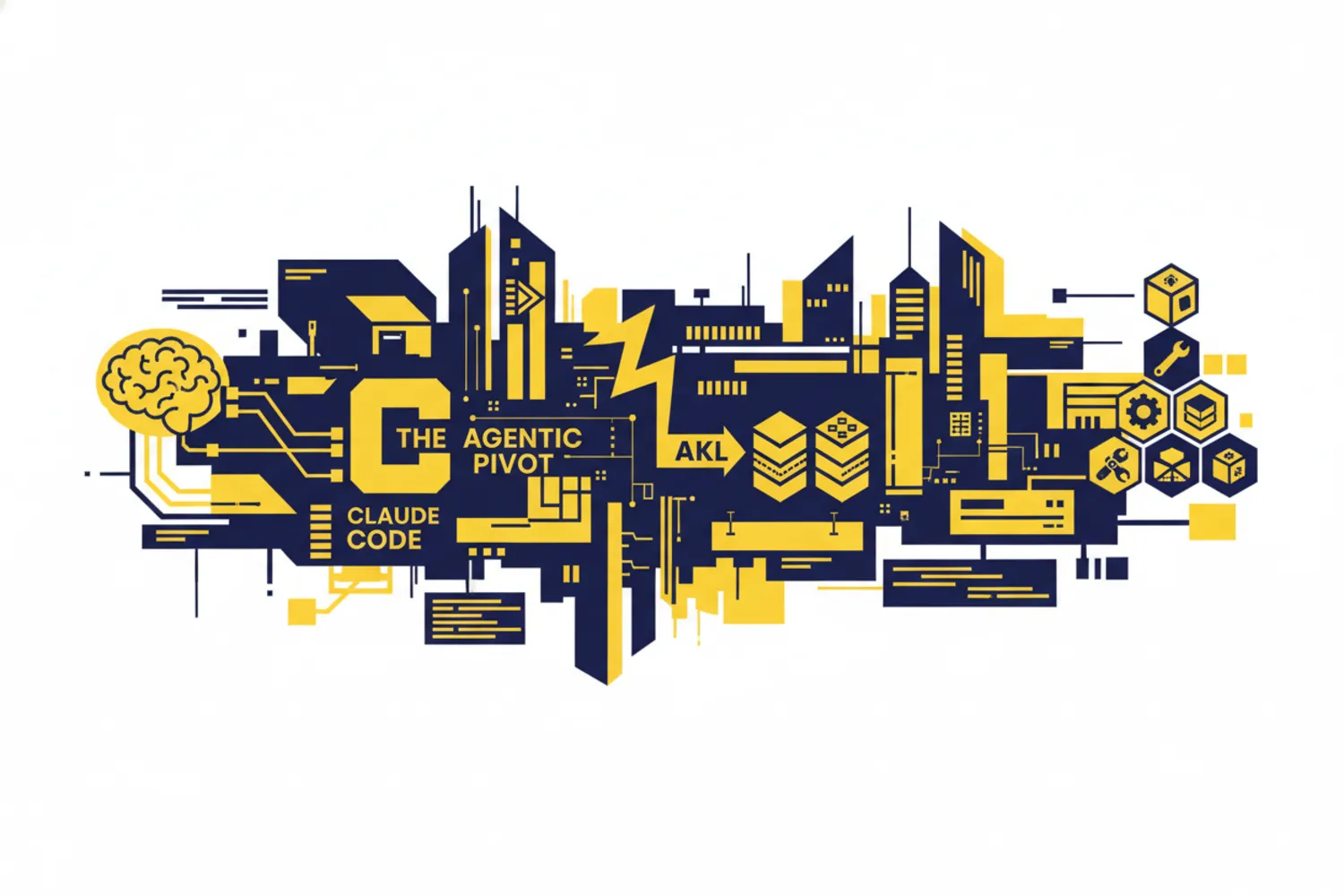
The ecosystem surrounding Claude Code is expanding aggressively, transitioning from a standalone tool to a platform-level solution. The introduction of the Claude Developer Platform signals a shift toward dynamic tool discovery and code-native orchestration, which significantly reduces token overhead compared to traditional natural language tool calling.
- Claude-mem: Solves long-term context continuity for Claude Code by implementing automatic session capture and AI compression.
- Claudian: A new Obsidian plugin that brings AI synthesis directly into knowledge work environments.
- Godogen: A demonstration of how these agents are moving beyond simple script generation to building complete software products like Godot games.
- Paseo: A new open-source runtime designed specifically to standardize how coding agents execute across diverse platforms.
Architecting for Persistence: The Agent Knowledge Layer
A major trend this week is the push toward persistent, structured memory. Gemini CLI has pioneered the Agent Knowledge Layer (AKL), a concept that allows agents to maintain state and context across sessions, addressing the 'forgetfulness' that has plagued early agent implementations.
- OpenViking: ByteDance’s new context database uses a filesystem-paradigm, treating memory as a hierarchical structure to optimize retrieval speed for AI agents.
- Deepagents: LangChain has released this official harness, which integrates planning, a dedicated filesystem backend, and subagent spawning capabilities.
- MiroFish: The universal swarm intelligence engine is shifting the focus toward multi-agent coordination, enabling complex prediction tasks that single-agent architectures cannot handle.
Efficiency and Performance in the Agent Era
As agents become more resource-intensive, the underlying infrastructure is evolving to prioritize speed and hardware efficiency. From browser automation to fine-tuning, the stack is getting leaner.
- Unsloth: An efficiency breakthrough for fine-tuning DeepSeek and Qwen models, offering 2x speed and 70% less VRAM usage.
- lightpanda-io/browser: A Zig-based headless browser that challenges traditional tools like Playwright by focusing on AI-native automation performance.
- Vite-plus: A Rust-based web toolchain designed to optimize AI-driven build pipelines, reducing latency in development loops.
⚡ Quick Bites
- OpenAI Codex: Updated to v0.115.0 with image inspection; remains under heavy migration to a unified app server foundation.
- OpenCode: Migrated to the Effect functional architecture in v1.2.27, aiming to resolve persistent memory leaks.
- Encyclopedia Britannica: Has officially initiated a lawsuit against OpenAI for copyright and trademark infringement.
- Free Software Foundation: Escalating pressure on closed-source model providers regarding the intersection of AI training and open-source licensing.
- Voygr: Launched a specialized maps API built specifically for the needs of AI agents and spatial applications.
- Chamber: A new AI teammate tool designed to handle the complexities of GPU infrastructure management.
📊 Comparison: Agent Orchestration Tools
📊 Tool | Core Focus | Architectural Shift
- Claude Code — Dynamic tool use — Code-native orchestration
- Gemini CLI — Persistent memory — Agent Knowledge Layer (AKL)
- OpenCode — Functional integrity — Effect framework migration
- Deepagents — Agent harness — Subagent spawning/planning
❓ FAQ: Today's AI News Explained
- Q: What is the Agent Knowledge Layer (AKL)? — It is an architectural concept introduced by Gemini CLI to provide agents with persistent, structured memory and multi-agent coordination, moving beyond the stateless nature of standard LLM interactions.
- Q: Why are agents switching to code-native orchestration? — It reduces context accumulation and token overhead by allowing agents to execute programmatic instructions rather than relying on verbose natural language explanations for every tool call.
- Q: What is the significance of the PageIndex project? — PageIndex proposes a vectorless, reasoning-based RAG engine that could potentially replace traditional, heavy vector databases, offering up to 97% storage savings.
- Q: What are the current security concerns regarding MCP? — The Model Context Protocol, while an industry standard for agent interoperability, was recently identified as having a security vulnerability that could lead to Docker container leaks.
🔮 Editor's Take: The era of 'chatting' with an AI is dying; the era of 'orchestrating' AI agents is beginning. Developers who master the transition from natural language prompts to code-native tool orchestration will define the next generation of software engineering.